
08
Oct 2026
There was a strange sense of anticipation when we set out that morning. We knew we were going to celebrate Friendship Day with children supported by Cuddles Foundation, but none of us really knew what to expect. We had prepared games, art activities and return gifts, but the reality of what awaited us only became clear when we arrived at Wadiya Hospital in Lower Parel.
The journey there felt almost completely different from what followed. We played music, talked amongst ourselves and watched the rain outside. At one point, I opened the bus window and let the rain fall on me while everyone else kept theirs shut. It felt peaceful, warm and almost carefree.
Then we entered the hospital.
The atmosphere changed almost immediately. The laughter and music disappeared into a much quieter environment. We eventually reached the children's ward, where children and their parents were waiting. That was when it became real.
It was as though the world, which had seemed so warm only moments earlier, had suddenly been replaced by cool, sullen greys.
I remember making a decision then. I did not want to treat the children as overtly fragile objects or make them feel as though everyone around them was pitying them. They were children first. They deserved to laugh, play, joke around, make things and celebrate Friendship Day like anyone else.
So I gave myself a simple goal: if I could make even one child smile, I would consider the day a success.
I began by distributing the colour pencils we had brought as return gifts, introducing myself to the children and wishing them a Happy Friendship Day. I mostly spoke in Hindi, and I tried to make every interaction feel as normal as possible.
Later, a friend and I tried to organise a story-making game. We took turns giving words and built ridiculous stories out of them. It was hilarious to us, but the reaction was not quite what we expected. We tried jokes and impressions too, before realising something important.
The audience mattered.
What might work brilliantly with children elsewhere did not necessarily work here. The children responded much better to clapping exercises, games and personal interactions. We adapted our approach instead of forcing our original plans.
For the rest of the day, I moved between activities. I helped with art supplies, distributed more gifts, made Friendship Day cards, helped children with finger painting and assisted with friendship bands. Most importantly, I tried to make sure nobody was left out. If someone was sitting alone or did not want to join a game, I would sit beside them and talk for a while. If someone new arrived, I would introduce myself and try to include them.
Some of my favourite moments were completely unplanned.
One particularly energetic child came over with a few friends and began speaking to me in English. His English was far from perfect, but I complimented him on it. We started joking around, and one of my friends jokingly called me crazy.
The child immediately defended me.
He told my friend that I was nice, that I had asked him good questions, that I paid attention to him and that I was caring and funny. Then he pointed at me and said that, although everyone was nice, I was the nicest.
I genuinely did not know what to do with that.
I had arrived thinking I was not particularly good with children. I was simply trying to help and make their day a little happier. Yet here was a child telling me that I was his favourite.
My inner monologue briefly stopped functioning.
It was not pride that I felt. It was pure discombobulation, gratitude and a strange kind of happiness. It reminded me that sometimes you can have a much greater impact on someone than you realise.
Throughout the day, we were careful to follow hospital hygiene protocols. I wore a mask throughout the visit, and we were cautious about physical interaction. But I never wanted that caution to become a barrier. The children deserved care, but they also deserved normalcy.
That, to me, was one of the most important lessons of the day.
Cuddles Foundation works to provide nutritional support to children undergoing cancer treatment, working with hospitals and paediatric oncology teams to support both children and their families. Before we left, the volunteers explained more about their work and how we could continue supporting them. I stayed back for a while to speak to one of them and thank her for the work she was doing.
We could not take photographs with the children because of privacy considerations. Instead, I left with something far more personal: a handwritten, hand-decorated Friendship Day card from one of the children I had spent time with.
After around seven hours, we finally left the hospital.
We tried to lighten the mood with ice cream, music and conversation on the way back, but there was still a strange heaviness hanging over us. We returned to school exhausted, sat in an air-conditioned classroom and tried to recover before our final Media Studies period.
On the way out, one of my friends said that the children had seemed extremely normal. My immediate reaction was defensive. What had he expected? They were children. Of course they were going to joke, laugh, play and behave like children.
But later, I understood what he meant.
For those seven hours, we were not simply looking at children who had cancer. We were talking to children. We were playing with children. We were laughing with children. They had personalities, jokes, opinions, friendships and their own little worlds.
Cancer was part of their lives.
It did not define who they were.
We often think of volunteering as something where we go somewhere to help other people. We imagine ourselves giving our time, effort or resources. Yet I left feeling as though I had received something too.
I was reminded that kindness does not always have to be complicated. Sometimes it is sitting beside someone. Sometimes it is listening. Sometimes it is making a ridiculous, incoherent joke. Sometimes it is simply making sure that the person sitting alone knows they have not been forgotten.
And sometimes, without even realising it, you can make someone feel seen.
When we left the hospital, the rain had stopped.
The city looked different from the one we had travelled through that morning.
The same roads were there, the same buildings, the same people going about their lives. But something about the day had changed the way I saw them. Perhaps that is what I will remember most.
Not the hospital. Not the certificate. Not even the activities we had planned. The laughter. The little conversations. The friendship bands. The card. The child who told me I was the nicest.
And the rain.
Someday, when all of those details have begun to blur, I think we will still remember how that day felt.
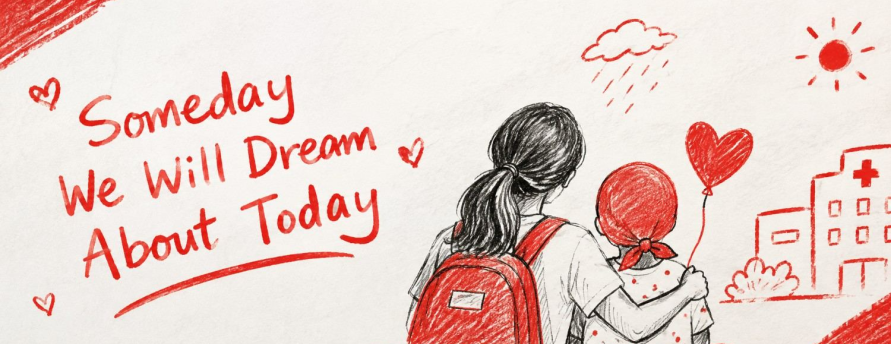
Someday, we will dream about today.
 Leave a reply
 Reviews (0)


©Mumbai Educational Trust, All rights reserved | Last Modified Date: Friday, September 27th, 2019